Nail Biting Recovery: When Quitting Is Only the Beginning
Stopping the biting gives damaged nails the opportunity to grow—but it doesn’t correct or heal everything nail biting leaves behind. In this case study, we document how Corrective Care transformed one client’s nails, with particular attention to the overgrown eponychium and hardened surrounding skin.
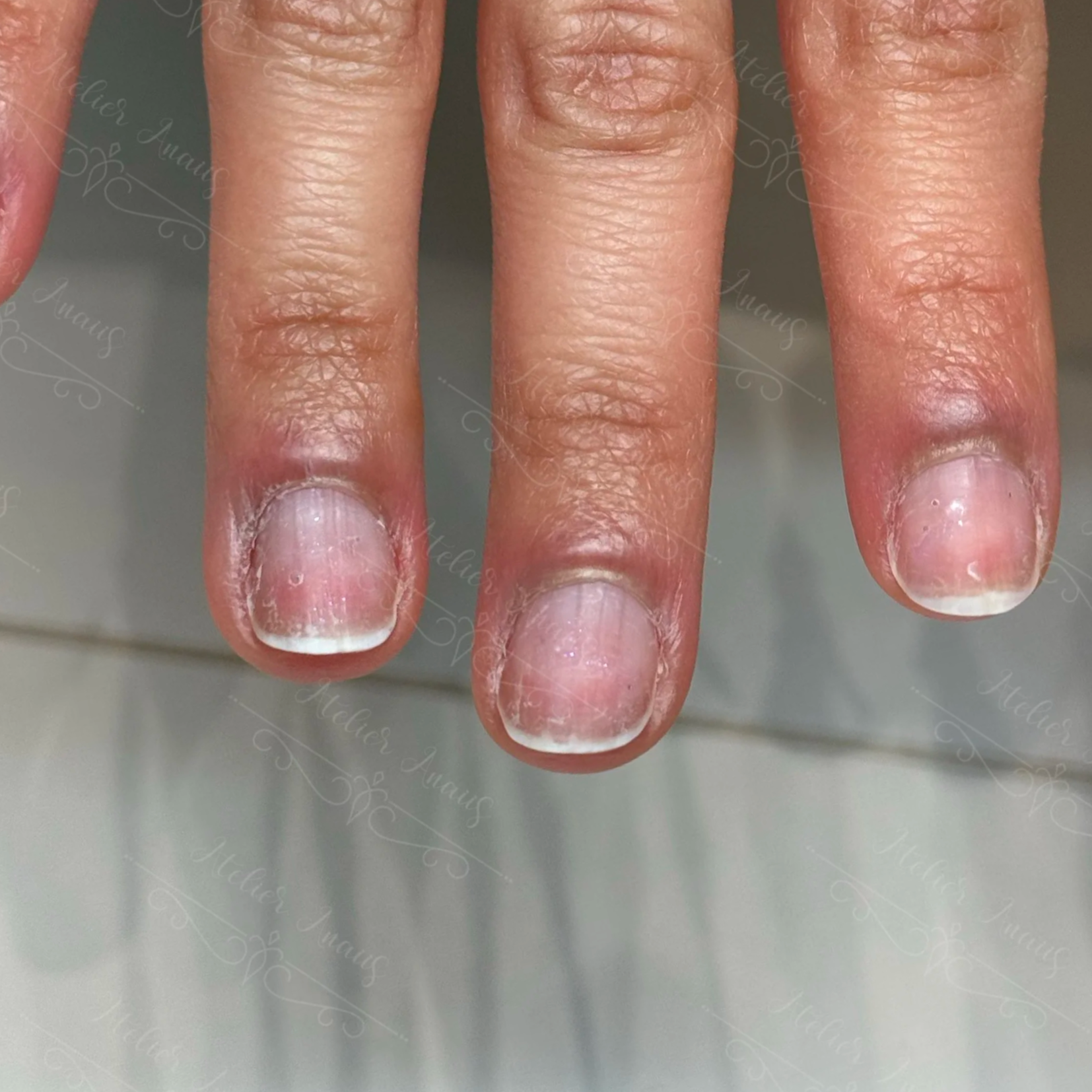
The client’s nails at the beginning of her first appointment.
For most people, quitting nail biting is a long and arduous process, not a smooth one-time deal. As we’ll see in this Transformation case study, quitting is rarely as permanent as one believes in the beginning: you can quit once, and revert back to nail biting after some time. In fact, most nail biters have experienced quitting many times, trapped in a cycle of being able to quit after a mighty effort, then slipping back to their old ways. What follows is draining: The effort seems wasted, discouragement follows, and nail biting persists.
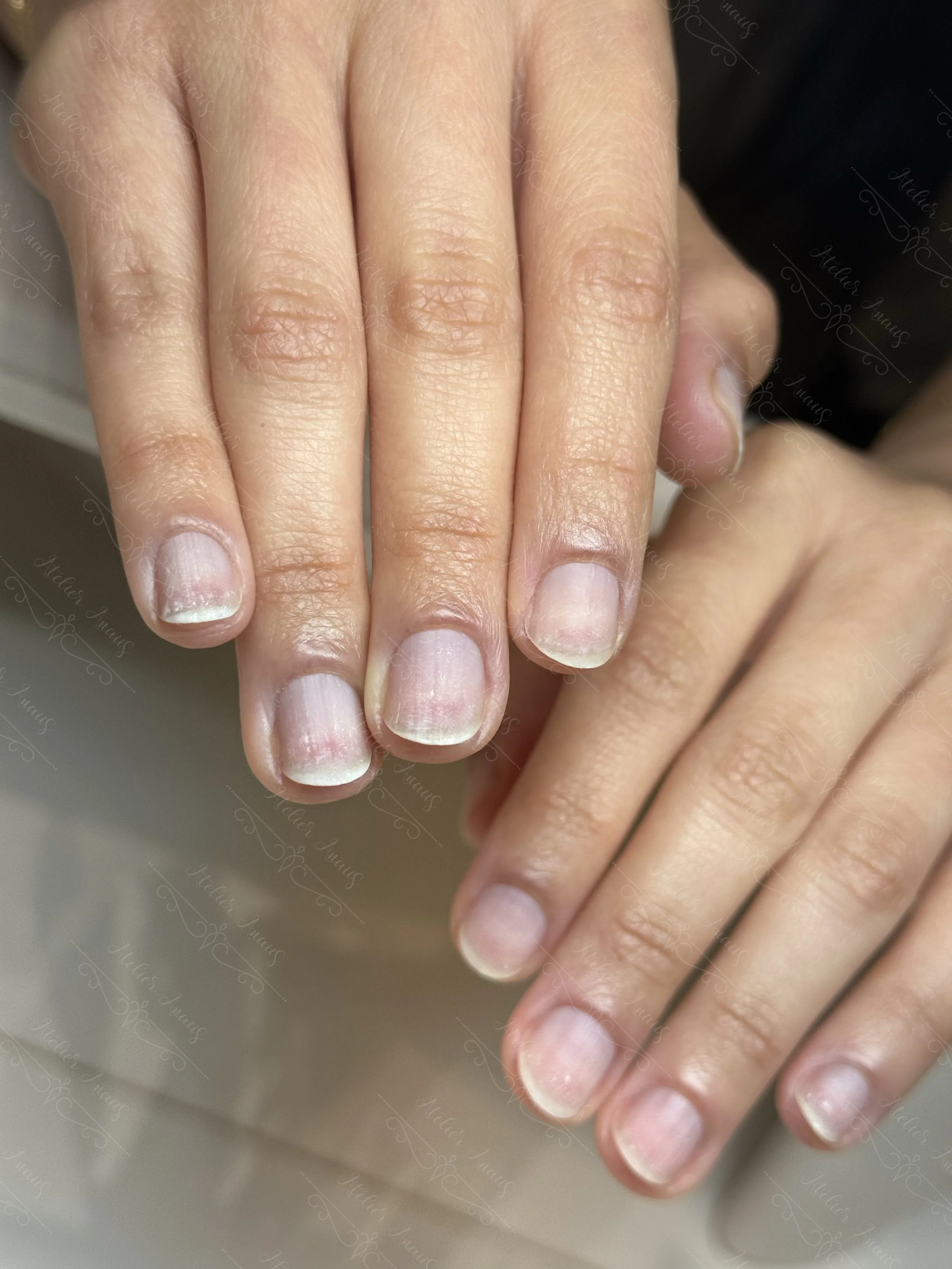
The client’s nails after the second appointment. We can notice visible improvement in the texture of her nail walls and eponychium.
Nail Biting Recovery then, requires an intricate balance between the efforts to quit biting and deliberately healing your nails. In other words, both psychological and physical aspects have to be managed. This is because on one hand, “Quitting” is short lived when you just leave your already-damaged nails alone afterwards; on the other hand, your nails will never have the undisturbed time that’s necessary to heal if you don’t actually stop biting your nails.
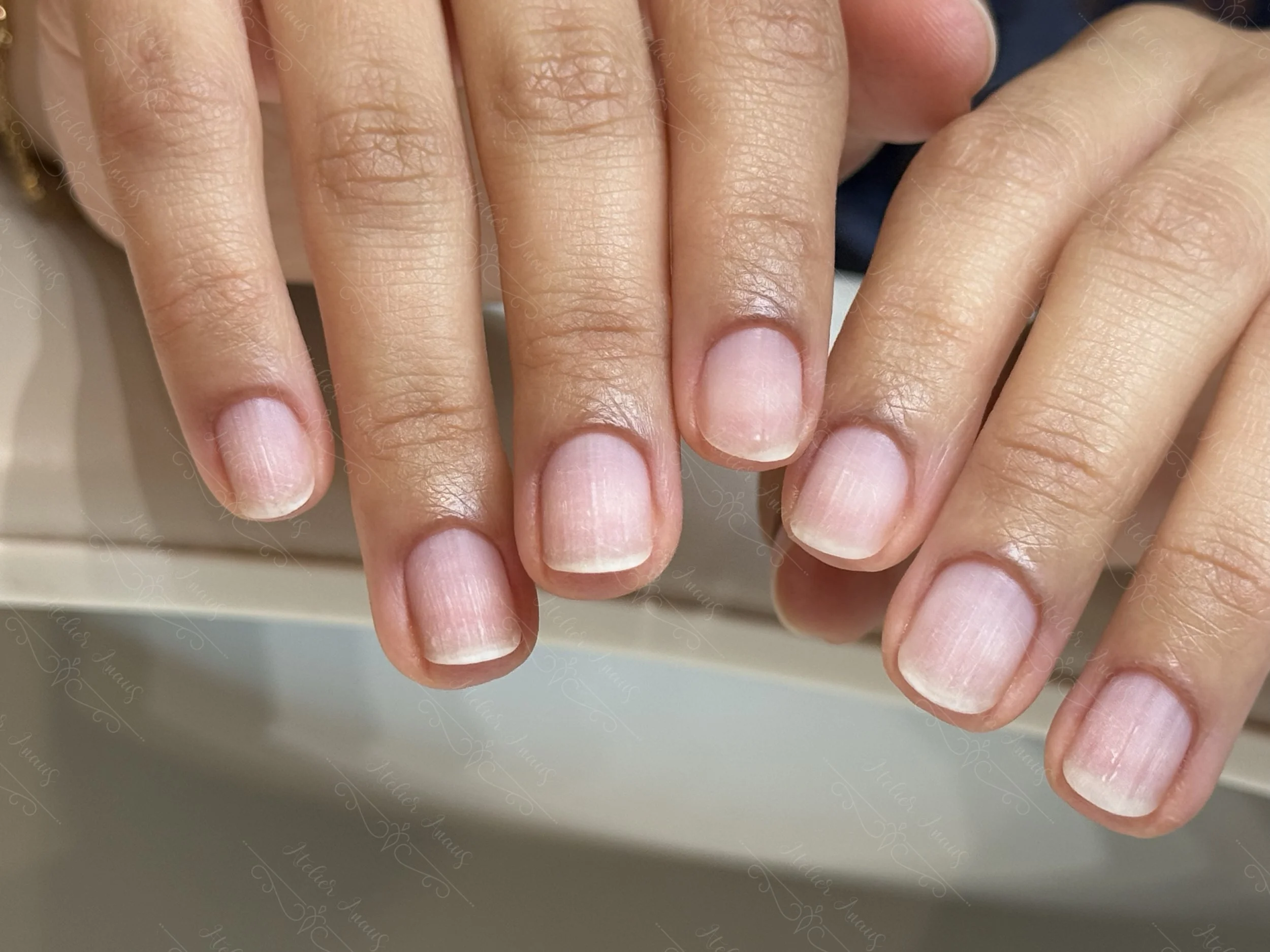
The client’s nails today, after nine months with us. They are healthy, strong, and exhibit zero traces of nail biting damage.
In this Transformation case study, we use real photos of one client to help illustrate the process and timeline of her Recovery at Atelier Anaiis. You may or may not see aspects that are similar to what you’re currently dealing with. Our intention is to present the particular combination of nail biting symptoms we faced in one client, the solutions we integrated into care, and the transformation results we achieved to give you hope for your own recovery. To get an in-depth understanding of the Atelier Anaiis nail care system that every client goes through, you can read The Five Pillars of the Atelier Anaiis Manicure.
Before Nail Biting Recovery at Atelier Anaiis
At our Philadelphia nail care practice, every client begins by submitting an intake form. Through your submission, we learn your nail story and your unique goals, so that we can envision the path there. The following is an excerpt from this client’s intake form:
“I have been biting my nails for as long as I can remember. Back in 2022, I managed to stop for over a year and my nails were the best they had ever been. However, after a year they started splitting, and so reverted back to old habits. My resolution this year is to have healthier nails that don’t split.”
We learn quite a few things here. First, this client–who is in her thirties–has been a lifelong nail biter. While various studies show that nail biting is most common amongst teens, with a whopping 45% of them engaging in the behavior according to this study, the prevalence actually drops off with age, to 20-25% of young adults continuing to bite their nails. So with this client, we know that the nail damage we see is the consequence of more than three decades of consistent nail biting, not just the result from a short period of time.
Second, we learn that she managed to stop biting her nails for one year in 2022. Modern culture encourages people to evaluate progress by comparing it against the ideal–in this case, successfully quitting once and sustaining it for the rest of her life–which is a recipe for bringing guilt and shame to the forefront. Since she reverted back to nail biting after one year, her quitting efforts are considered to be a failure. But from our perspective, reverting back to nail biting doesn’t negate the accomplishment of successfully stopping nail biting once before. We felt great hope that, by actively addressing the physical triggers and symptoms, she would be able to build on that experience.
Third, the client was aware that the reason she went back to nail biting was because her nails had begun to split. Since the photo from her intake form showed polish on her nails, our guess was that her nails had split because the manicures she was getting failed to meaningfully address the vulnerable conditions of her natural nails. In other words, those manicures were mere surface decoration on top of damaged nails, and because conventional manicures mostly skip work that actually improves the nail environment, her natural nails weren’t healing in a sustainable way. Worse, if electric nail files had been used, the manicures she was getting could actually have been the cause of the splitting.
This leads to perhaps the biggest difference-maker in our Nail Biting Recovery system at Atelier Anaiis: our philosophy that healthy nail growth depends on the condition of the skin surrounding the nail plate.
The Heart of the Matter
So what are we talking about when we refer to the “nail environment?”
For most people, when they talk about wanting stronger nails, they focus solely on the nail plate. This is intuitive for most clients and service providers alike.
But the truth is that the nail plate is just one part of an interdependent system at the edge of your fingers.
It’s only because the nail is the most visible and stressed-about part of the finger, that most treat it as if it IS the entire system. What’s ignored then, is the biological fact that by the time the nail plate emerges from the nail matrix, it’s made up of dead keratin cells. This “dead-ness” is the reason your nails don’t hurt when you trim them, and it’s also the reason that only focusing on the nail plate will never produce stronger nails. There is no strengthening something that’s already dead.
When this client first submitted her intake form, we knew she had focused only on the visible nail.
What Most Nail Professionals See
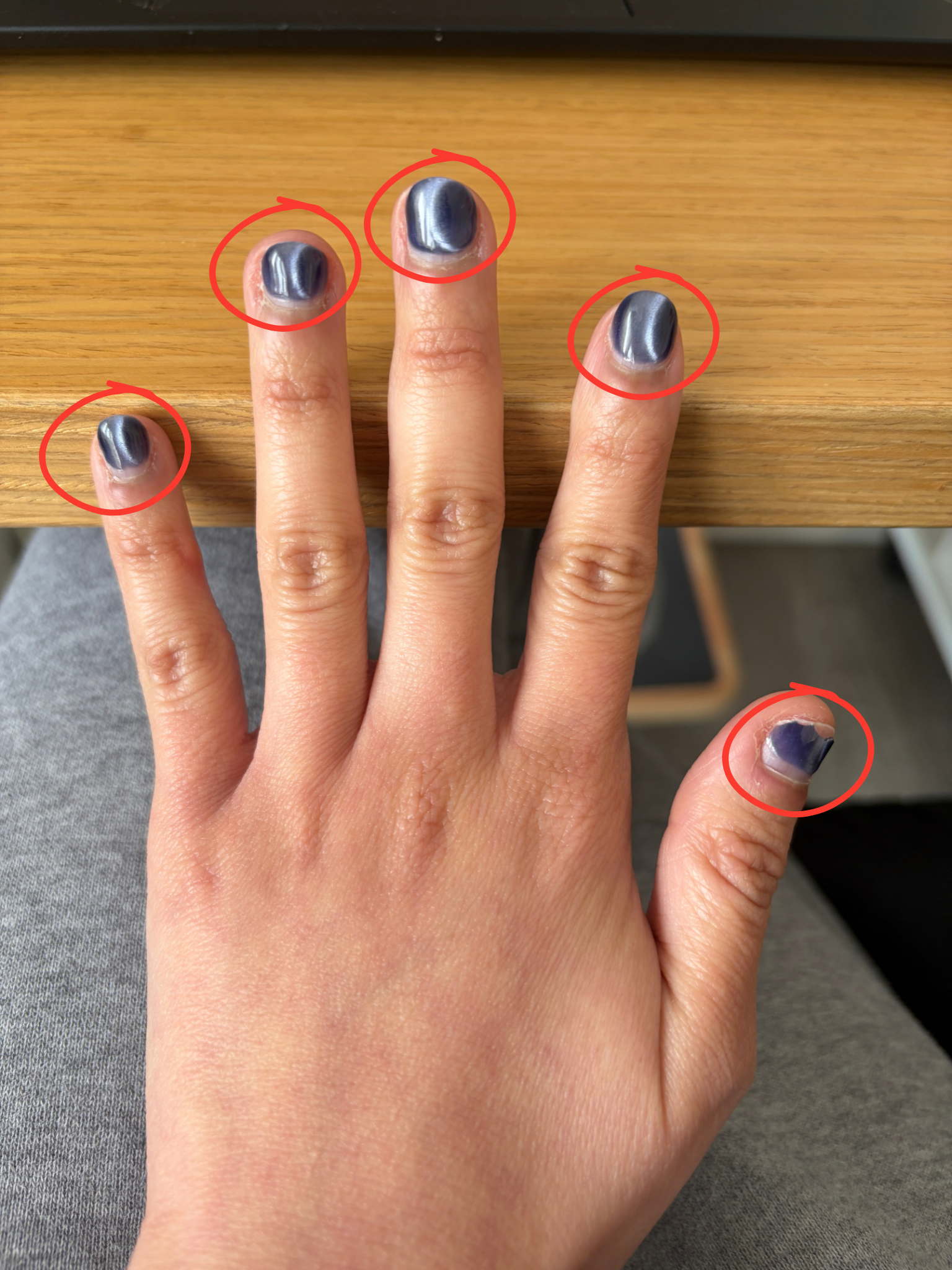
Most nail professionals, upon seeing this client’s hands, focus on the color. In its simplest form, most conventional manicures follow this belief: Manicure = Color.
Physically, this most often looks like: drilling off existing polish, buffing the nails for adhesion, applying new polish, and calling it a day. With clients who are nail biters, most manicures can only try to cover up the damage, providing a short-term illusion, because that’s all they’ve been trained to provide. The nail techs don’t have the requisite knowledge or experience to transform the health of the nail environment.
What We See
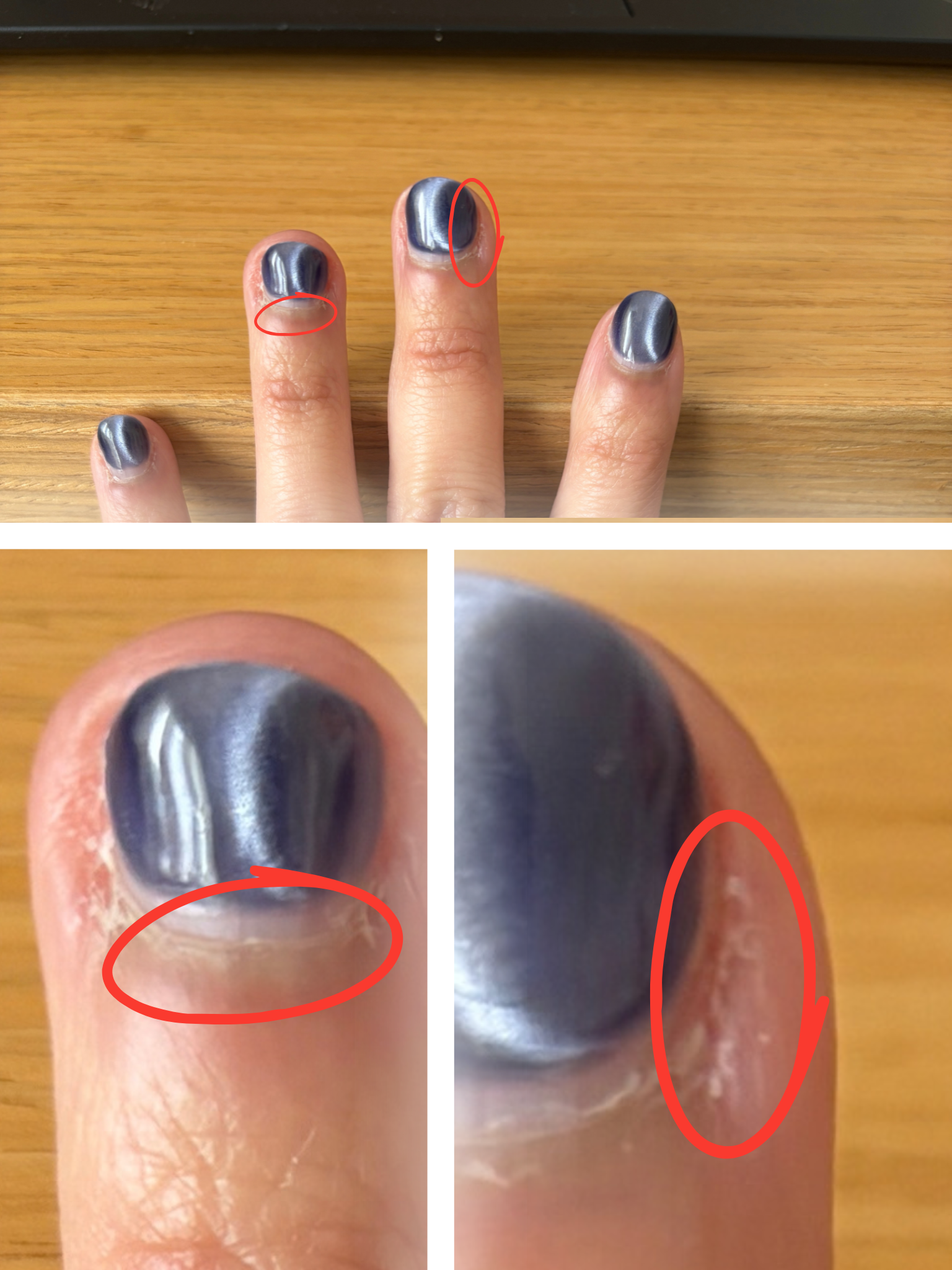
The first time we saw this client’s hands, we zeroed in on two things: The dry, jagged nail walls and the overgrown eponychium.
Instead of these features introducing panic, we approached them from places of opportunity. There was so much room for growth and improvement for this client. And it all started with our hand-only techniques.
Hand-Only Techniques
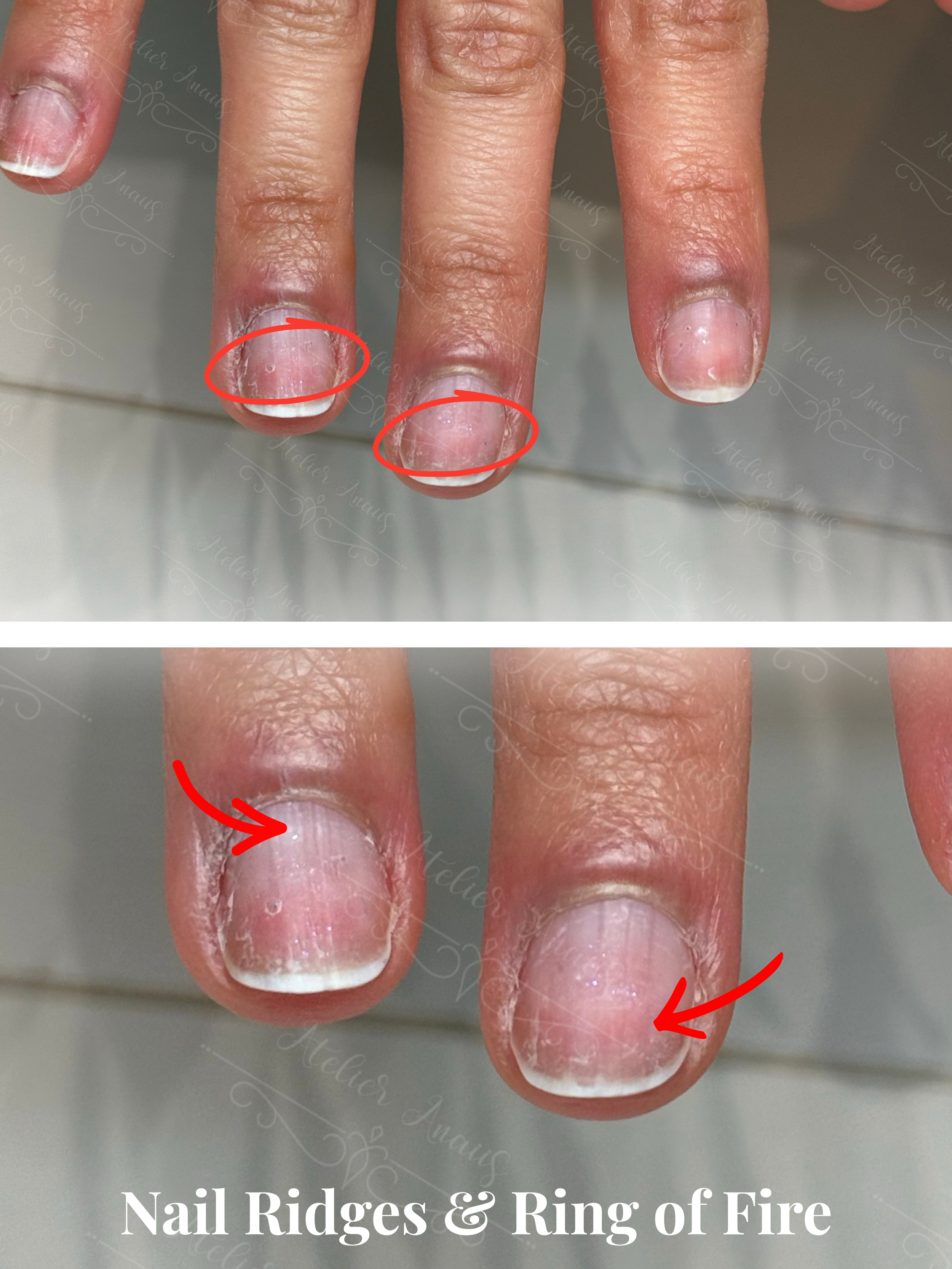
All through her nail biting behavior, this client continued to get conventional manicures. Wanting nails to look pretty to cover up the consequences of her nail biting underneath was completely understandable: her desire wasn’t a problem. What was a problem though, evident through the red marks at the bottom half of her nails, was that electric nail files had been used on her nails.
This red mark, clearly visible in the photo above, is known as a “Ring of Fire.” They are the result of electric nail drills applying too much heat and pressure to the natural nail, and are accompanied by an indefinite stinging pain in the affected nails at every touch. And unfortunately, they are an all-too-common sight in the clients that come to us.
“Rings of Fire” are prevalent not only because most nail salons use nail drills to remove existing product, but because their use removes things indiscriminately, including the nail ridges we see above in the photo. While we believe that ridges are a natural response to the nail trying to protect itself and treat them accordingly, conventional nail salons forcefully buff the nail surface in an effort to get rid of ridges, which only results in the natural nails becoming extremely thin and prone to splitting. Case in point, that’s exactly what had happened to this client’s nails.
Our philosophy of only using hand tools benefitted this client’s nails tremendously. By shunning nail drills, her nails were no longer subjected to the intense heat and pressure from their use, and her body was finally able to focus on restoring her nails.
For her starting treatment plan, we prescribed two Corrective Care services to address her nail issues: Eponychium Reshaping and Overgrown Hardened Skin Removal.
Eponychium Reshaping
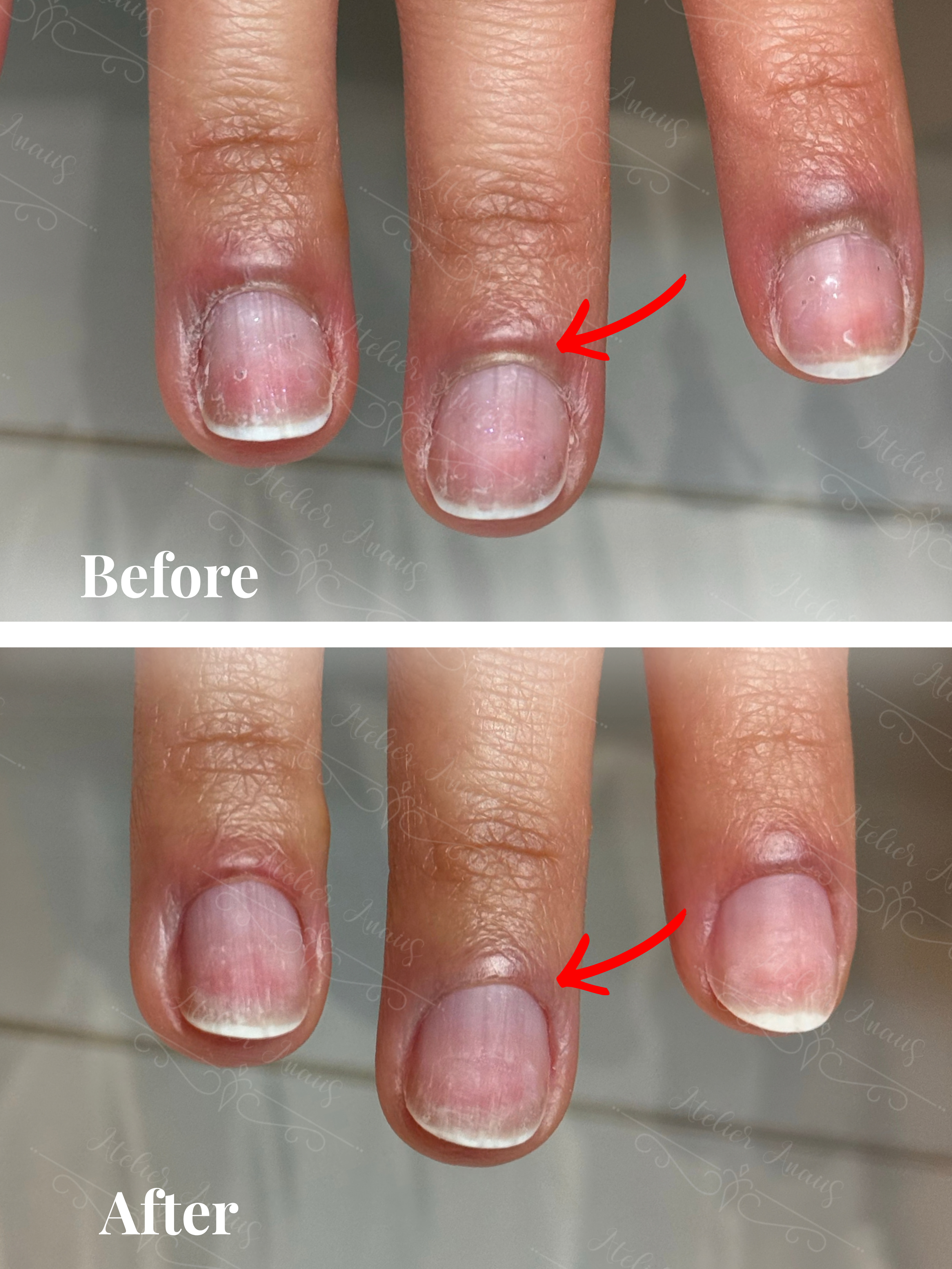
The eponychium is a layer of living skin at the base of the nail that acts as a barrier to the nail matrix. It’s an ingenious design: The nail matrix is shielded from bacteria and debris because it’s the epicenter of nail growth, responsible for producing keratin cells that become nail plates. As we can see above with this client, when we examined her hands at the beginning of the first appointment, the eponychium was thick and unmanaged. What tended to happen then, was that as new nails continued to grow out, it would pull on the eponychium. Eventually, a breaking point would be reached, with the eponychium giving way and splitting, damaging the protection it provides to the nail matrix.
A nail matrix without adequate protection from bacteria and debris produces thin, brittle, and otherwise compromised nails in response.
A split eponychium is also a major trigger for nail biting, as any piece of loose skin in the nail environment is apt to be.
Upon seeing the eponychium in this condition, the tendency for most professionals would be to “push back the cuticles,” mistakenly assuming the two to be the same. Unfortunately, “pushing back the cuticles” cannot improve the condition of the eponychium, nor prevent it from splitting.
“Pushing back the cuticles” is like using a broom to push dead leaves from an unpruned tree to one side of the driveway, and leaving it there. It looks clean visually for a short period of time, but the dead leaves continue to pile up, interfering with activity on the driveway. What Eponychium Reshaping does is prune the actual tree so that it can be healthier overall, and there are less dead leaves that fall to the ground.
Importantly, through Eponychium Reshaping, we also safely detach and remove existing cuticles, successfully avoiding painting polish on dead skin. Because this treatment is not part of conventional manicures, they often paint on the cuticles, which explains the imperfect sealing of the product, leading to peeling and breaking within two weeks.
By reshaping the eponychium appointment after appointment, this client’s gel protection lasted four weeks every time, giving her nails ample undisturbed time to reshape and regrow.
Overgrown Hardened Skin Removal
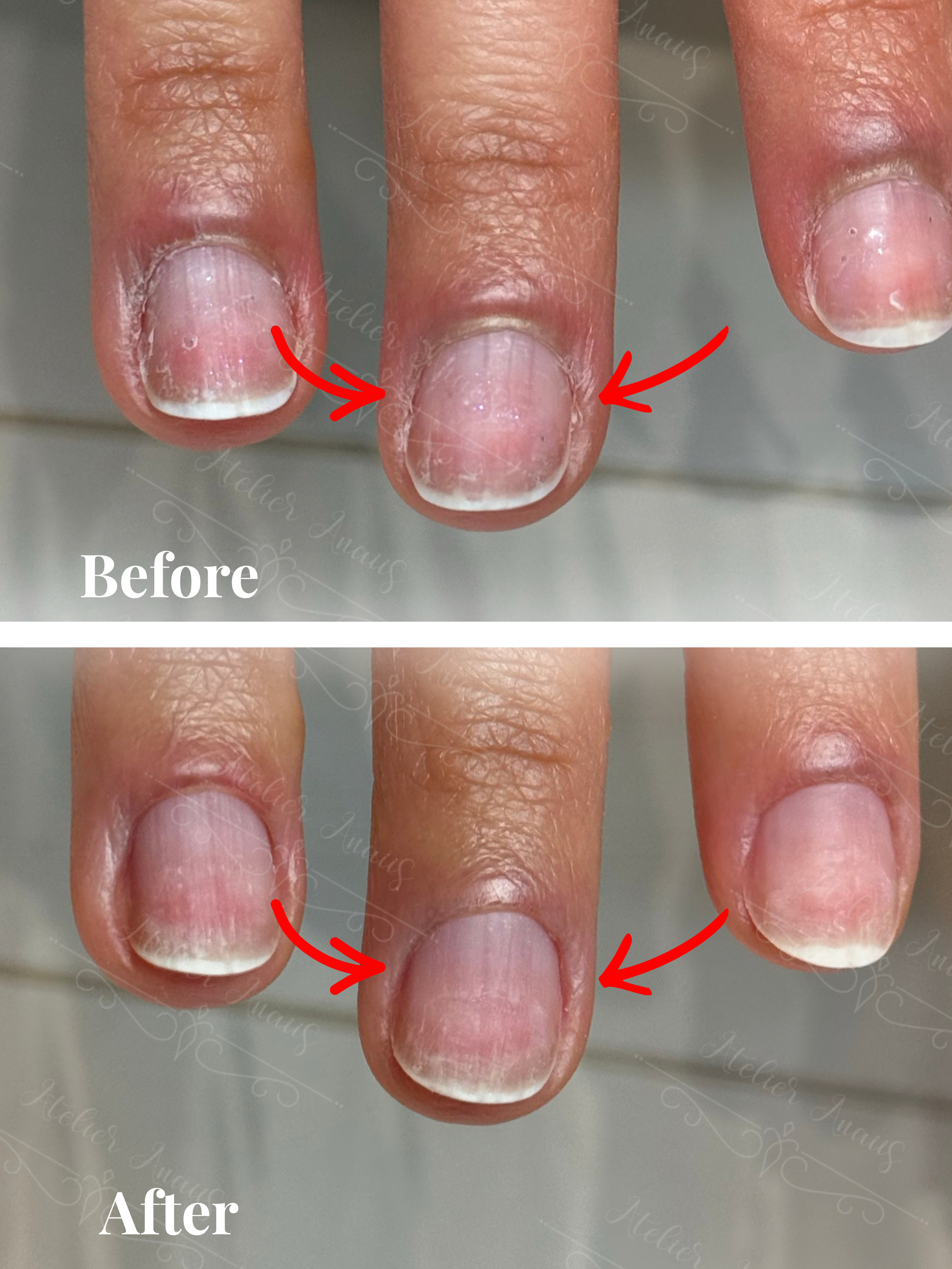
After decades of nail biting, the texture of this client’s nail walls had changed, becoming hard and jagged as a result of the biting. This problem is particular to the side walls and if you bite your nails, you’d know from experience that the subconscious mind naturally gravitates towards this irregularity on the skin, making them particularly prone to your biting. This becomes the catalyst for a familiar cycle: nail biting makes the surrounding skin tougher, and this new, toughened skin becomes an even more prominent physical trigger for your nail biting.
Through Overgrown Hardened Skin Removal, we eliminated this physical trigger for the client and facilitated the return of supple, flexible skin.
Having smooth skin is crucial in Nail Biting Recovery, as we’ve observed that strong nails are always surrounded by healthy skin.
As we talked about in the very beginning, with Corrective Care, we addressed both the efforts to quit nail biting, and transforming the nail environment to be healthier.
An Undisturbed Period of Beautiful Growth
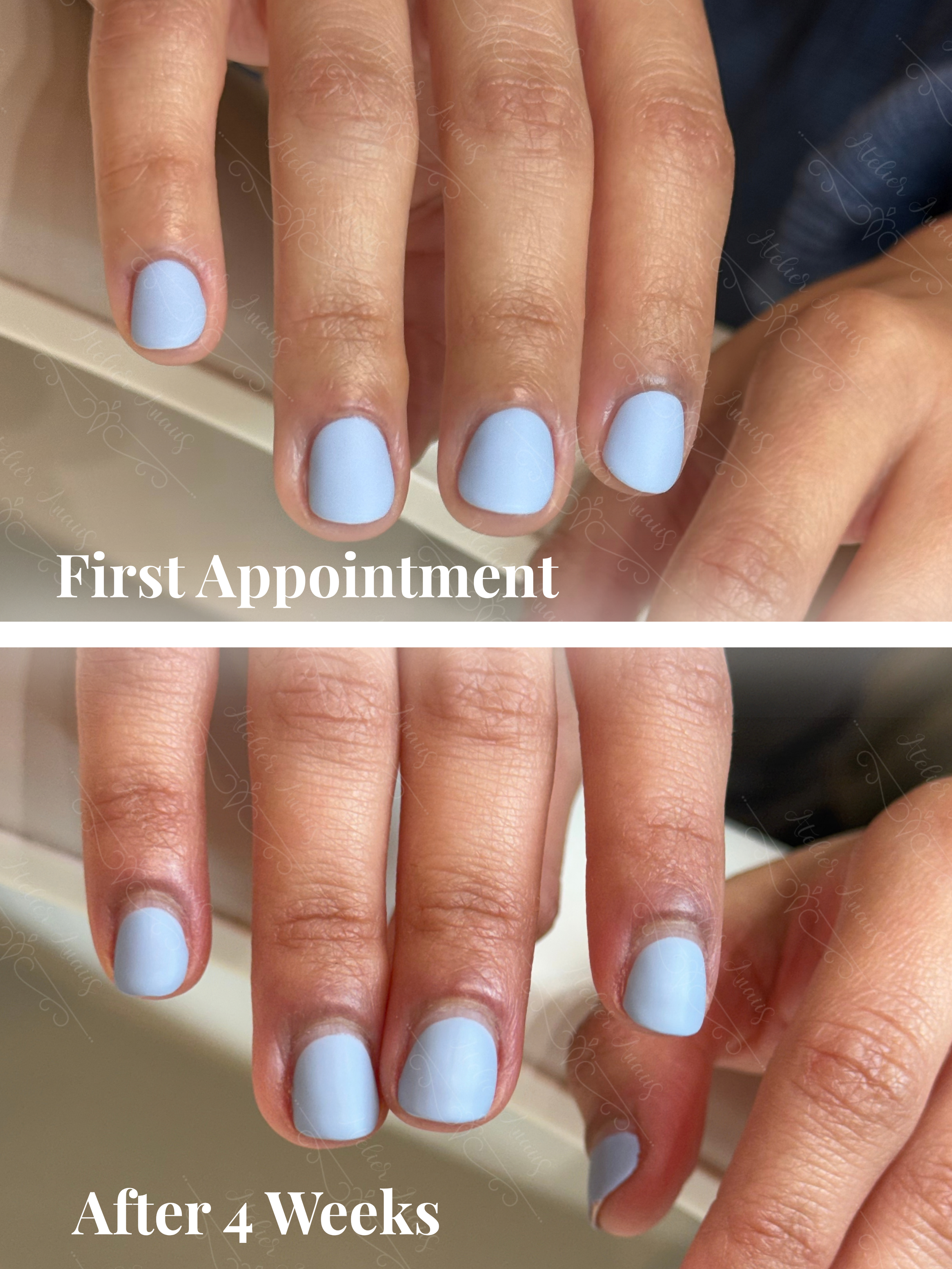
The final pillar of an Atelier Anaiis Manicure is Protection. Protection was particularly relevant for this client, because for three decades before working with us, her nails had rarely experienced a day without being chewed on. Conversely, the reason why her nails had been in the best shape when she’d managed to quit for a year in 2022 was because they had finally been afforded the time to grow undisturbed.
Throughout this client’s time with us, we’ve successfully provided consistent Protection for her natural nails, four weeks at a time.
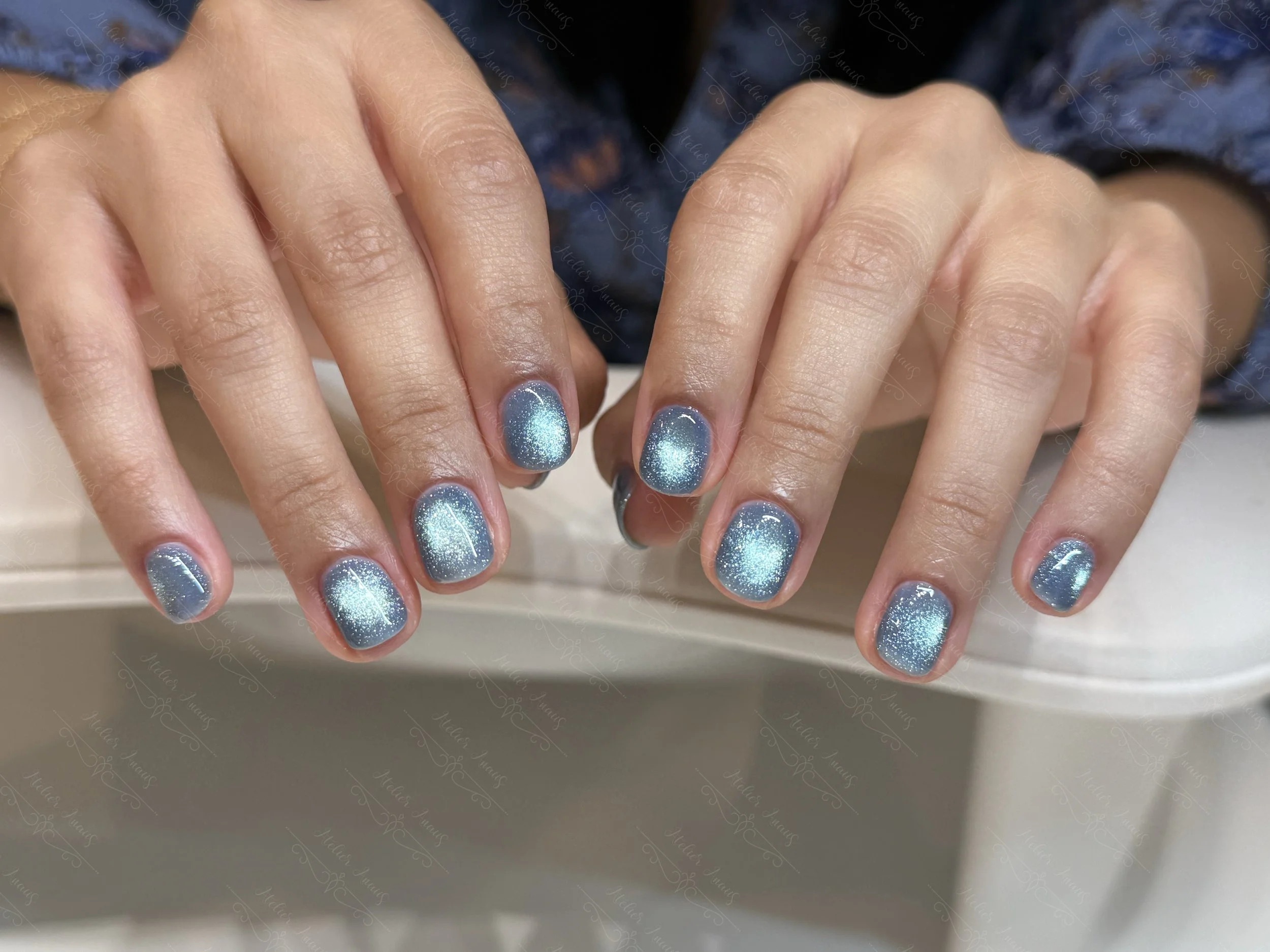
This is no small feat, as it means that the gel layer atop her nails maintains its integrity for four weeks without chipping, breaking, or peeling. This longevity, in turn, provides the natural nails sustained protection, enabling it to regrow. Because so much attention is paid to the health of the natural nails, this Protection remains beautiful for the entire four weeks in between appointments.
The compounding effect of this Protection, appointment after appointment, shepherded the transformation of her nails.
Today, this client’s natural nails are virtually unrecognizable, with little trace of her previous life-long nail biting behavior.
Conclusion
With this particular client, the pillars of Grounding, Corrective Care, and Protection played the biggest roles in her transformation. Every appointment began with a review of how her nails had held up over the past four weeks, and we adjusted and fine-tuned various aspects of the pillars to ensure that the gel Protection lasted her all four weeks every time.
This is not to say that there weren’t hiccups on the road: there were times when she relapsed to nail biting after particularly stressful events.
But those moments were never detrimental to our overall progress, because we constantly reminded her of how far she’d come from where she’d started. Every hiccup was a learning experience, contributing to the process and outcome.
Today, this client continues to care for her nails with us every four weeks. She’s left her nail biting behavior behind and transitioned from recovery to maintenance, enjoying life with strong, healthy nails she no longer stresses about.
If you’d like to work with us for your Nail Biting Recovery, we’ll be here for you.