Recovering from Chronic Hangnails and Receding Nail Beds
This client believed that keeping her nails bare was the healthiest thing she could do for them. Yet beneath the surface, chronic hangnails, damaged surrounding skin, and receding nail beds told a different story. Through restorative nail care, protective gel care, and long-term structural support, we helped her rethink what healthy nail care actually looks like.
If you happen to be a lover of plants like we are, you’ll notice that we’ve planted a sidewalk garden outside of our nail care studio in Old City. Amongst the proud red geraniums and charming white petunias, our climbing roses take center stage. To plant a rose can mean so many things – at Atelier Anaiis, a rose is a metaphor for nails and how we think about caring for them. This means thinking about the whole plant, by pruning, staking, and fertilizing, not only focusing on the famous blooms. Nails, just like roses, beg to be considered holistically. Most nail businesses do the equivalent of focusing just on the flower.
When we first planted roses, we knew so little, and thought of them like any other plant. They had sharp thorns that occasionally nipped at us to be mindful, but otherwise, we assumed we could just apply the minimal routine we already had for indoor plants — making sure they’re adequately watered and that was about it. This mirrors how so many people think about their nails: those in the habit of maintaining bare nails, like the client in this case study, just clip them down and call it a day.
While she’d thought she was doing the healthiest thing for her nails by not having any product on them, she was about to find out that, in fact, she’d been practicing the equivalent of near-abandonment plant care for years. And her nails were suffering for it.
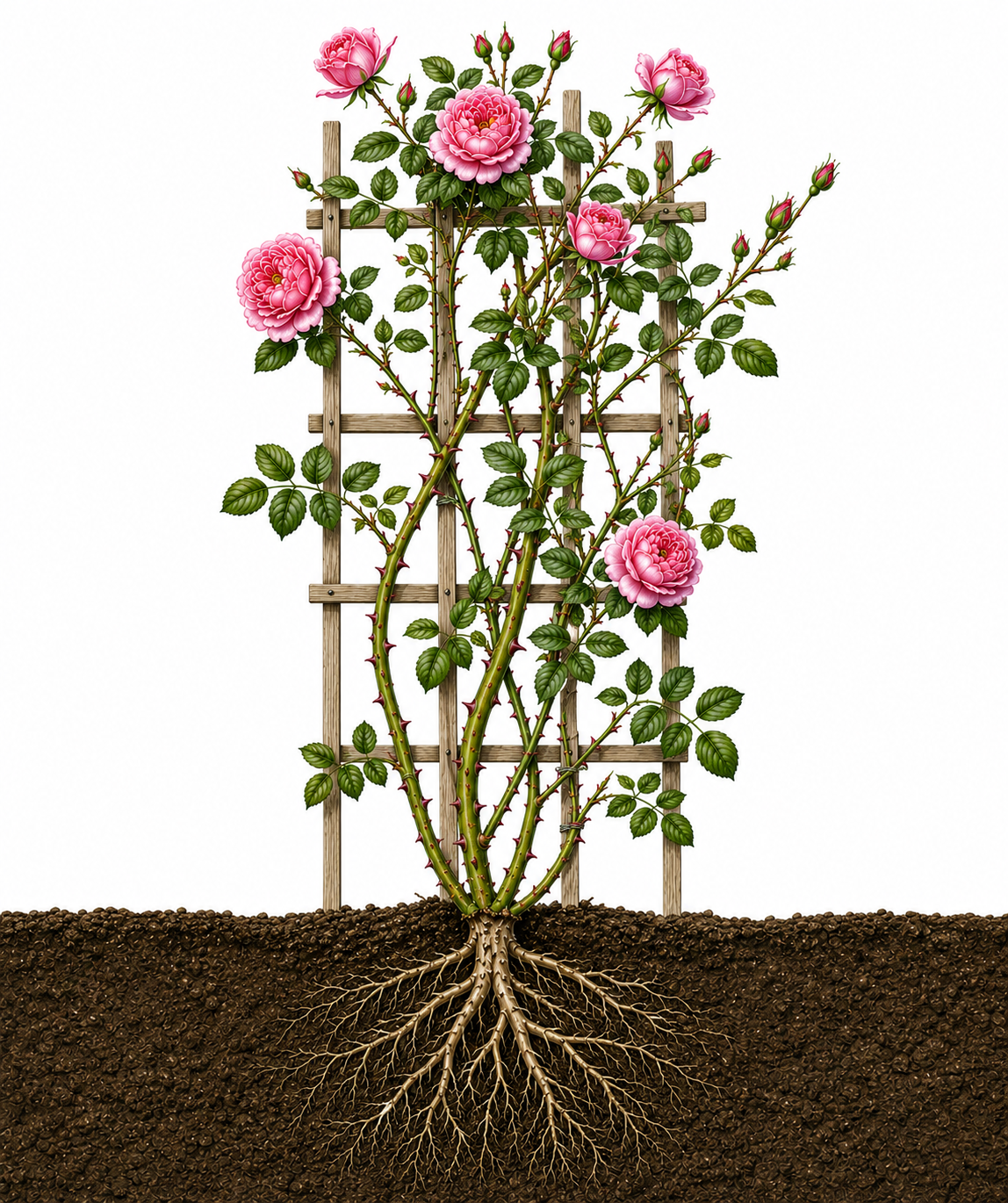
Nails, like roses, ask to be considered holistically, from top to bottom.
Shrinking Nail Beds
We begin at the top, at everyone’s object of focus. Much like a blooming rose flower, the nail plates are what every manicured hand is judged on, what receives all the attention and color, and what’s fussed over when problems arise. In our client’s case, her chief concern was that her nail beds were shrinking: she clearly remembered a time when her nails were wider, larger, “more normal”, that as she grew older, her anxieties increased about her shrinking nail beds. She hardly recognized her own nails and hands anymore.
She was rightfully confused, “I’m not doing anything to my nails and I leave them alone, which should be the healthiest thing for them. So why don’t they look or feel healthy?”
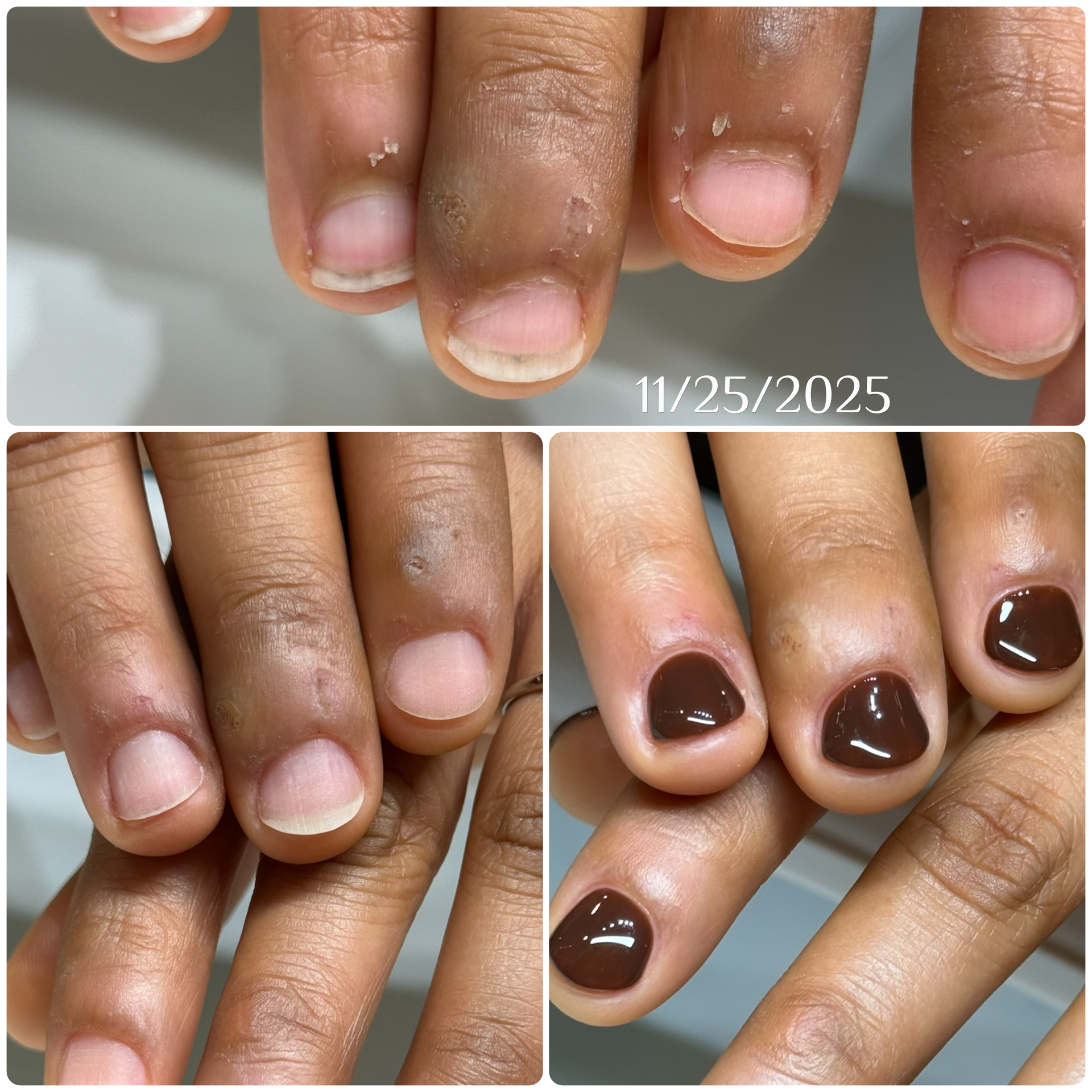
The client’s first appointment. At the top is the “Before”, showing hangnails, overgrown eponychium, and shrinking nail beds.
When we first planted roses, we were eager to see them bloom. It was the beginning of summer, so we watered them every four days (which was frequent for us), taking care not to drown them in sitting water, inviting root rot. They received plenty of sun and we waited and waited, but the blooms continued to evade us with each passing day. We were frustrated because we thought we were doing what was best for them, leaving them alone. We remember thinking, “Isn’t this what every plant wants?”
We learned over time that, in fact, roses are living things that are to be cared for by the living hand. They require labor, strategy, and attention. The first lesson we learned as fledgling rose gardeners was the necessity of pruning regularly – selectively removing some of the branches and offshoots that had grown so that its energy could be funneled into flower production. We learned that energy within a rose is finite, that we needed to guide this energy distribution by subtraction. In other words, only by removing canes could we get flowers. While this was completely counterintuitive to us in the beginning, the resources published by leading rose gardeners and farmers proved right: our climbing roses began to bloom only after we began pruning it, and not only that, the whole plant began to thrive, stretching its canes taller and taller towards the sky.
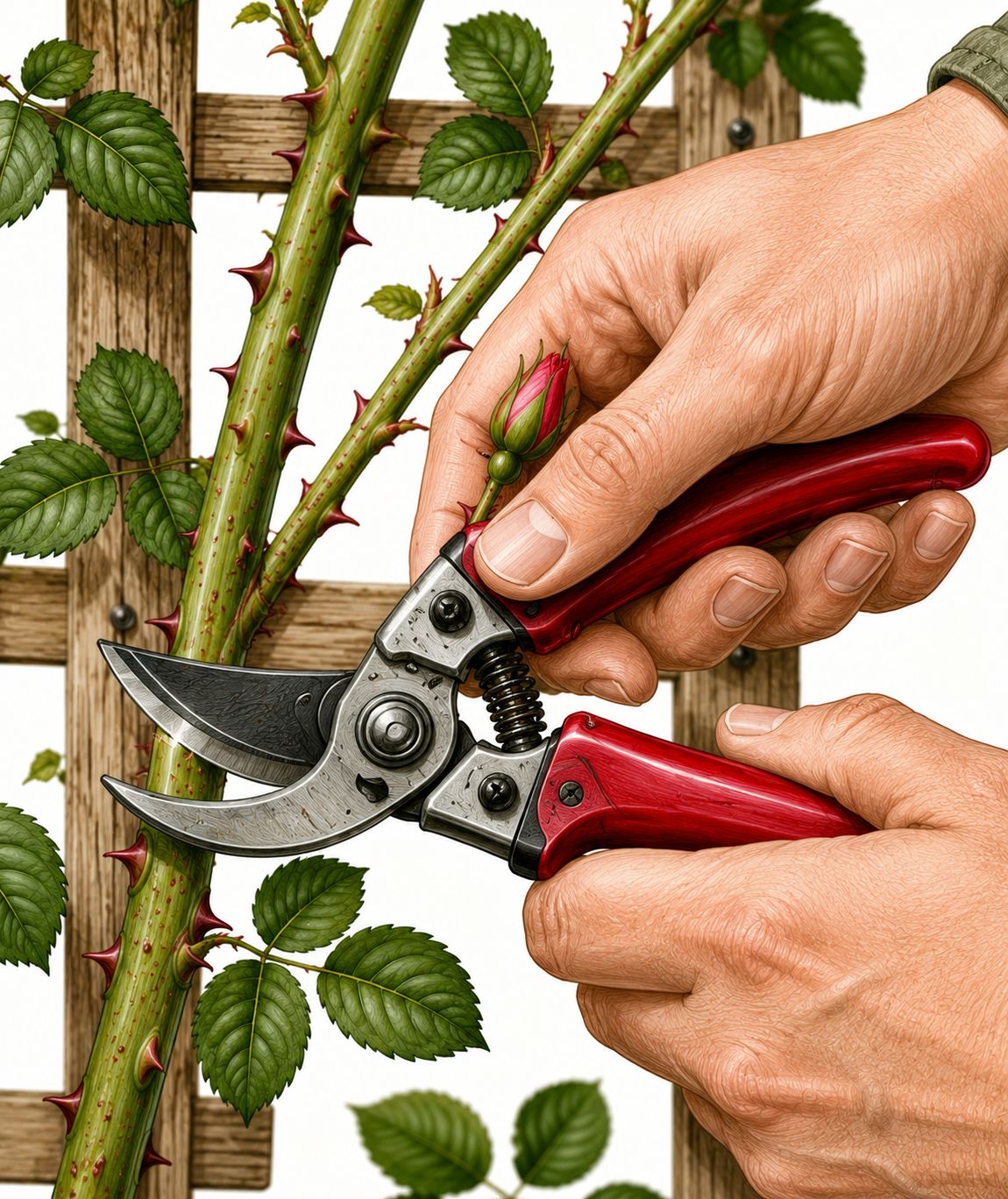
The client’s eponychium had to be treated and reshaped, just as we needed to prune some of the rose bush’s canes for the plant to prosper.
This lesson startled us: roses were just like nails. Our client’s nails were shrinking precisely because she was leaving them alone and leaving them bare, and in this process, neglecting to pay attention to where her nails originated from in the first place. Just like how we transformed our rose bush that had been left to fend for itself, her eponychium – the living skin at the base of her nails – needed to be reshaped from the overgrown state she came to us with.
The eponychium’s main job is to protect the nail matrix, blocking debris and water from infiltrating the origin of nail cells. But when they’re overgrown and not cared for, they crack and split, with the body producing an overabundance of cuticles — dead skin cells — as a response. This client in particular already had exceedingly dry skin and did not have a habit of moisturizing, which was signaling the body to prioritize protecting the eponychium, when its job was to protect the nail matrix. It wasn’t pulling its weight, hogging limited resources which should have been going towards producing healthy nail plates.
Hangnails
The word “manicured” is equally at home in gardens and nails. Originating from the Latin roots manus (hand) and cura (care), the word literally translates to “care of the hands”. The most beautiful rose gardens are undeniably manicured, always well cared for, thoughtfully curated spaces. So cared for, in fact, that there are almost always gardeners tending to the grounds, pruning, weeding, fertilizing, even as visitors take in the sights. When you saunter through the manicured rose garden, you feel more at peace, happier, and your soul feels cared for. And yet, when thinking about nails, can every manicure unfailingly be described as examples of the hands being well cared for? Do you feel more at peace and your hands healthier after a manicure? Sadly, no. Rose gardens take the word, “manicure” much more to heart than most of the nail industry does.
In manicured rose gardens, gardeners work hard to take out weeds. We can even go as far as saying that weeding is one of the main jobs of gardeners and therefore contributes majorly to their interpretation of the word, “manicured.” Not only do stubborn weeds take away from the visual splendor of roses, they steal nutrients and moisture from them with their invasive root systems, act as breeding grounds for harmful insects, and degrade the soil.
There are unsightly “weeds” in the nail world too: hangnails. The torn pieces of skin require the body’s limited resources to heal, can become infected and affect nail production, keep you in constant pain and irritation, almost always lead to more hangnails, and of course, take away from the visual presentation of the nails. Through our nearly two decades of experience in nails, we can reliably say that we’ve never seen a client who regularly had hangnails have healthy nails. This client was no exception.
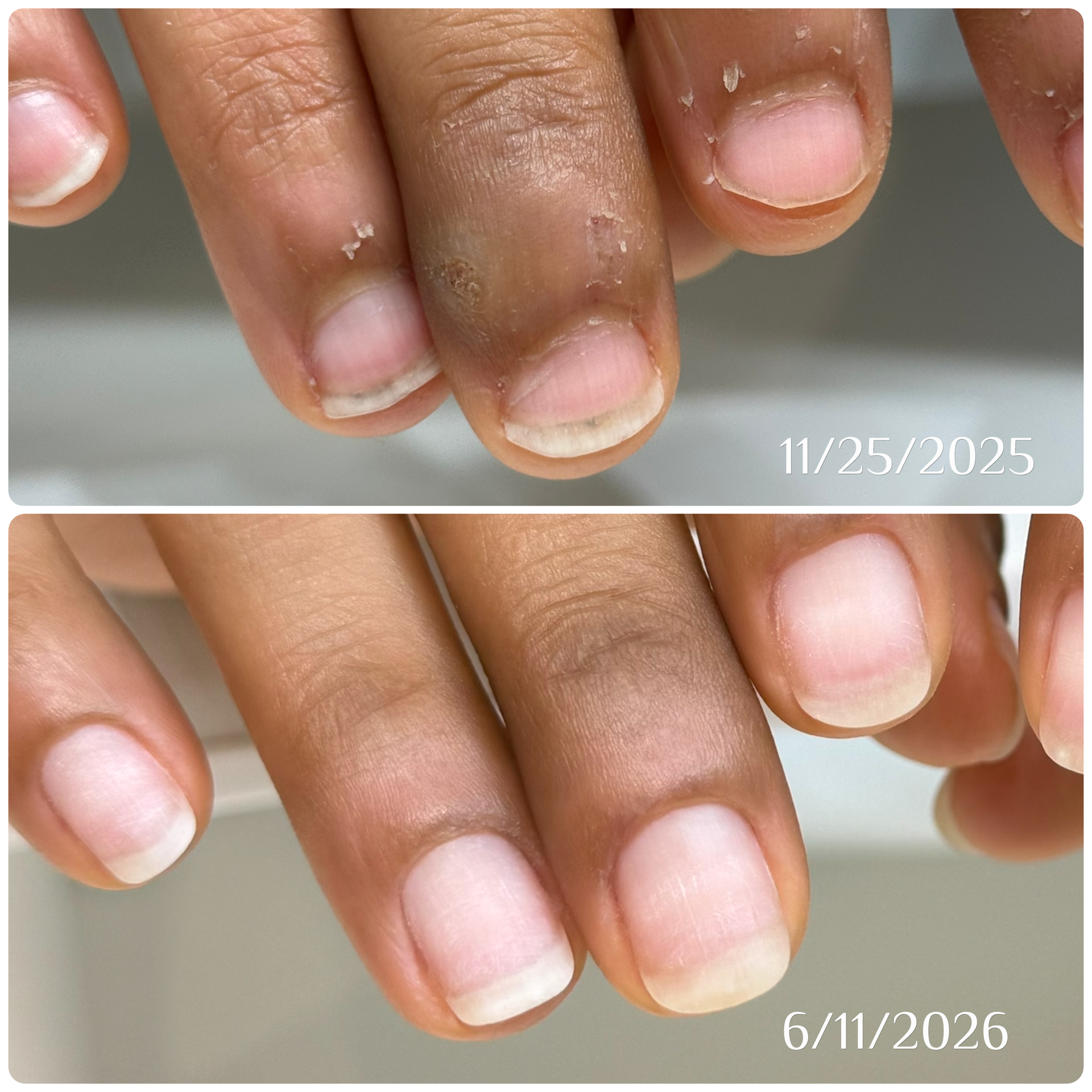
Hangnails were one of the major factors preventing this client from having long, healthy, and beautiful nails before the six month transformation through Restorative Nail Care.
During the first appointment, we saw just how many hangnails she really had. When she’d first sought our care, her only focus had been her shrinking nail beds – the possibility that hangnails could be indicative of a larger problem, or even that they should be taken seriously, never crossed her mind. As we treated hangnails and reduced its presence at every appointment, she saw and felt how much of a difference they made in expanding and growing healthier nails.
Brittleness
The next time you find yourself enchanted in a manicured rose garden, see if you can direct your attention to the ground, where the roses are planted. You’ll almost certainly see a layer more coarse and chunky than soil. As we’ve gained more experience as rose gardeners, we’ve learned the importance of mulching.
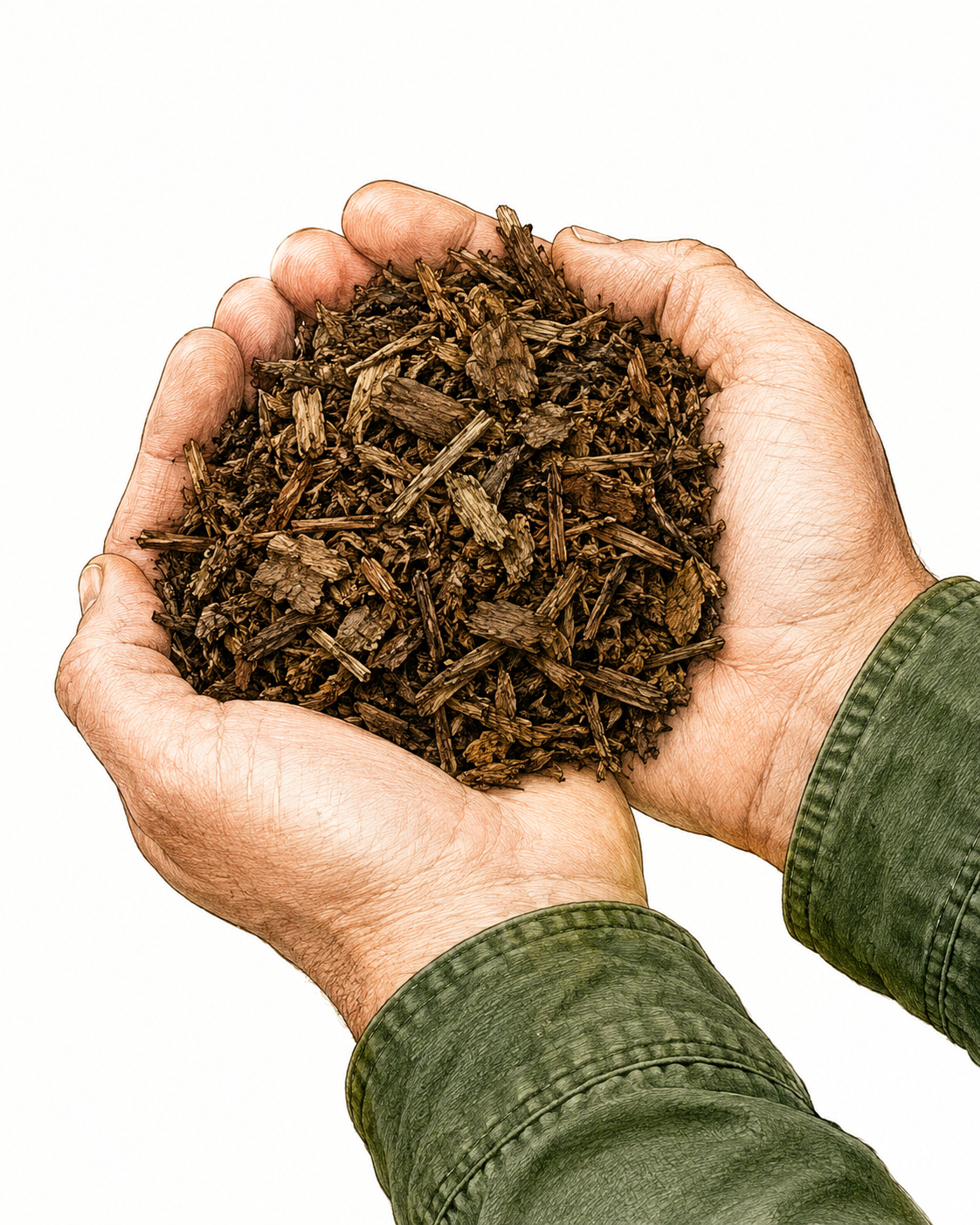
Mulch protects the roots of a rose, much like how the protective gel layer shields natural nails at Atelier Anaiis.
Mulch is an essential member of the rose gardener’s tool kit. Most commonly referring to organic matter like wood chips, bark, and straw, they protect the roots of the plant from extreme temperatures and the fluctuations of the seasons, keep the roots evenly moist by acting as a barrier to evaporation, and suppress weeds by blocking direct sunlight. The roots are the most important part of the rose bush – any plant, really – because it's the origin of all growth, including the spectacular blooms we all enjoy so much. Mulching shields this most consequential part of the plant from damage, creating an environment that encourages it to grow healthy and strong.
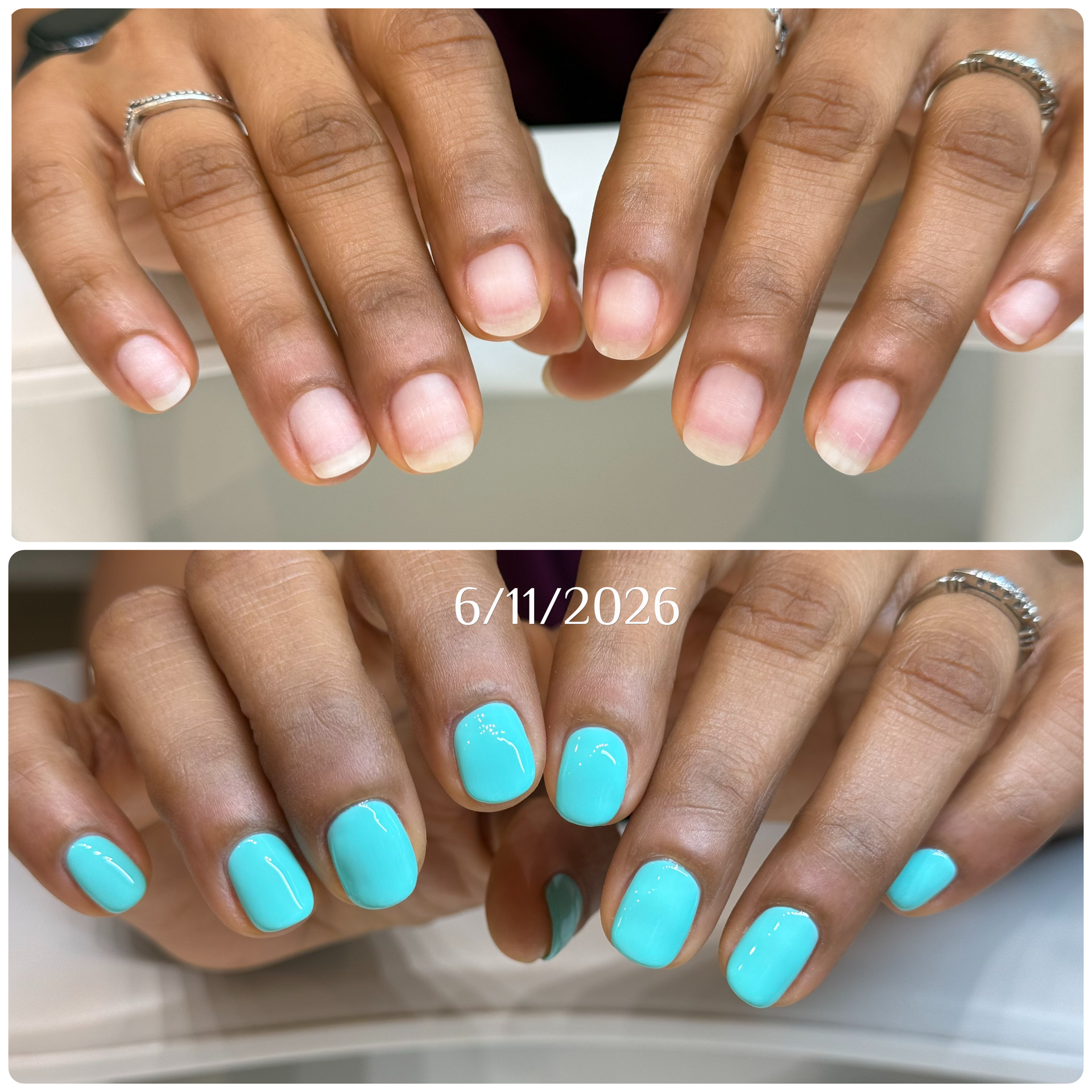
The stunning transformation of our client’s nails over six months, aided largely by the protective gel layer.
For Atelier Anaiis, the protective gel layer serves the same role that mulch does for the roots of a rose: it protects the nail plate and therefore the nail matrix, the origin of nail cells. For our client, who was finding her nails becoming more brittle over the years, keeping her nails bare was a nonstarter. Without protection, she was never going to be able to grow her nails longer, thicker, and stronger as they received damage from everyday activities. Just like a rose garden without mulch, her bare nails hadn’t been given a fighting chance to flourish.
Over time, this shield for her nails has allowed her nails to reshape and regrow undisturbed for four weeks at a time. It has resulted in a spectacular transformation of her nails, as magical as a neglected rose waking and realizing its full potential.
Roses and Nails at the Atelier
To plant a rose can mean so many things. Chiefly, they are saboteurs of our own acceptance of a minimal , nearly forsaken kind of plant care, mirrored by the common practice of keeping bare nails. They are invitations to dig deeper, with questions about where pleasure and beauty and health fit into the life of someone who cares.