Most people want healthy nails, but few can define what that actually means. We explore why healthy nails are about more than appearance—and why the condition of the skin surrounding them matters just as much.
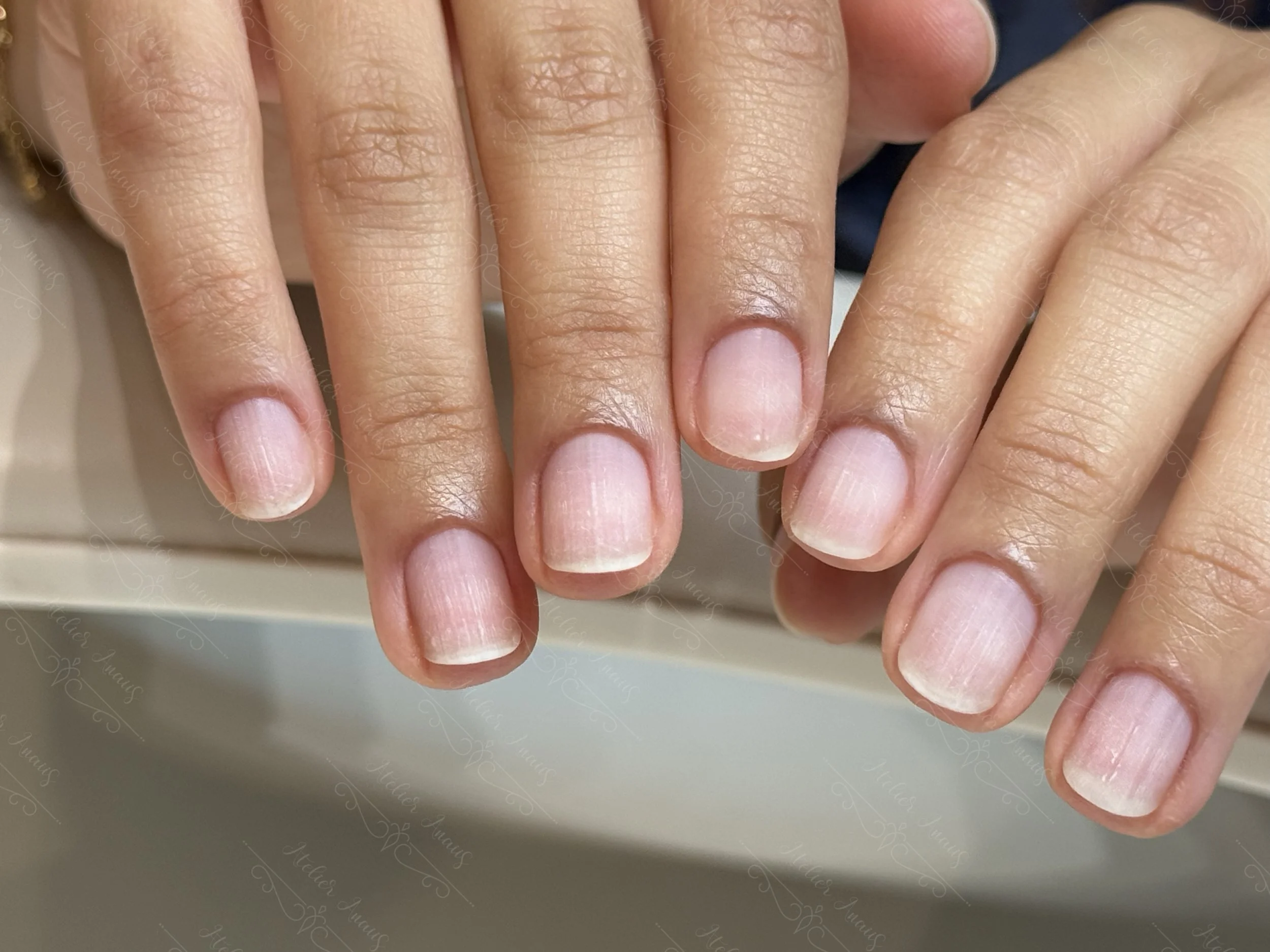
Table of Contents
More Than Just Nails
Why Smooth Skin is Nonnegotiable
Outside In
When we ask people their goals for their nails, “healthy” is one of the most common answers that we hear. And yet, when pressed to expand on their desire, the majority can only show pictures from social media or an AI-generated image: vague visuals of what healthy nails might look like.
This isn’t particularly surprising. After all, the premise of most nail services is “pretty nails,” and not healthy ones. So the inability to have a clear definition of what “healthy nails” are persists, reflecting the reality that most seek nail services based on the vague ideals of others.
This is like driving without a clear destination, with just a hazy idea of which direction the car should go – in a modern culture obsessed with time management and productivity, this sounds especially insane, doesn’t it?
So it makes sense that while “healthy nails” remains at the top of the wish list for most, few actually have nails that can be described as being healthy. At Atelier Anaiis, we believe that the lack of specificity of what “healthy nails” are, really hurts most people’s efforts toward their goal.
More Than Just Nails
The very first cornerstone of healthy nails as we define it here in our Philadelphia nail care studio, and guide our clients toward everyday is having smooth skin around the nails.
This tends to catch most people by surprise. It’s natural to think, “I want healthy nails – why are you talking about skin?”
But let’s think for a second. When you want a healthy, beautiful body, isn’t smooth skin automatically included in your definition? The skin on your face, arms, torso, and legs – it’s not an exaggeration to say that smoothness in these places has a real impact on your mental and physical health. Conversely, when you’re not so healthy, it’s often mirrored in the skin.
So the question is: Why would you think that smooth skin around the nails is an exception?
Why Smooth Skin is Nonnegotiable
Maximizes the Natural Skin Barrier
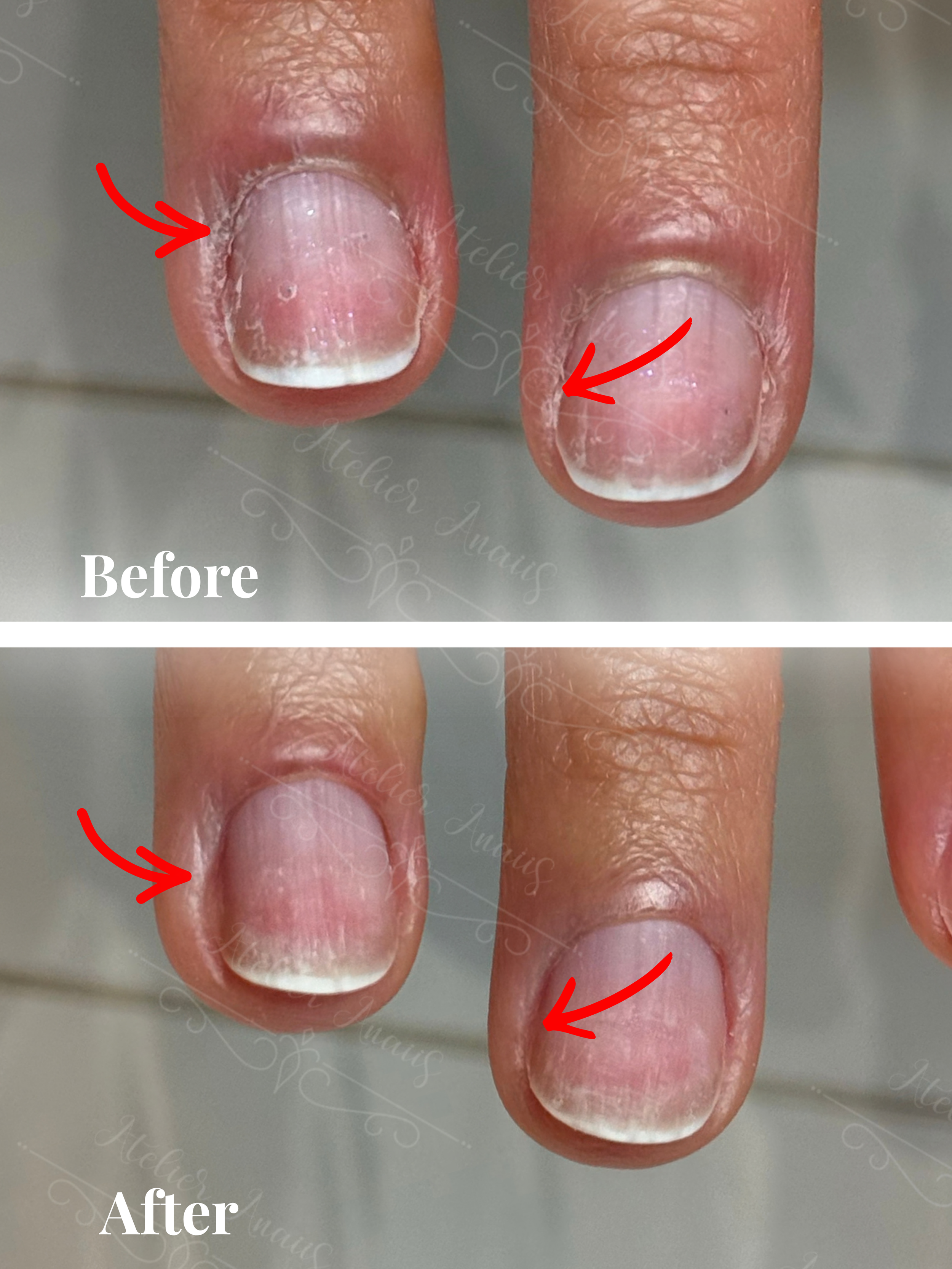
The first reason that having smooth skin around the nail is foundational to our definition of healthy nails is one that you may be familiar with, because it shares its importance elsewhere on the body: Smooth skin represents a strong skin barrier.
Because the nail unit is compact, having a strong, intact skin barrier is especially relevant for healthy nails. As an example, let’s compare the skin surrounding the nails with the skin on your arms.
Imagine a fairly regular occurrence for anyone who lives with a house cat: You’re playing around with them and their sharp claws scratch you lightly on the arm. The cut quickly swells and bleeds a little bit, visually confirming the disruption of the skin barrier. Putting the feelings you may have towards the cat aside, we’d imagine you can agree with us that the cut will have no lingering effect on the arm or your overall health. It’s no big deal even when it happens multiple times – for some cats, that’s just the price you pay to live with them.
Now imagine you have hangnails regularly: Maybe you have one right now and can gaze down at it. Hangnails, painful or bleeding, also represent a disruption of the skin barrier. At this point most people would assume hangnails are also no big deal, just like the cut on the arm from the playful cat. This is where we would disagree.
Hangnails, jagged nail folds, and damaged nail walls all have real, compounding consequences on nail health. Some part of you understands this inherently. We would be hard pressed to find anyone that enjoys the stinging pain of hangnails and damaged nail walls. That pain is a red alert for the body and there’s always a physical and psychological toll for needlessly extending it.
By intentionally treating damage through hand-only techniques, we repair the natural skin barrier so that it can function fully once again.
Reduces Nail Biting and Picking Triggers
From our experience working with nail biters and nail pickers, we often find that the skin surrounding their nails are in a state of abandonment.
Tunnel vision on the bitten nail plates makes people miss the fact that hangnails and jagged nail folds directly impact their nail growth and serve as major triggers for their behaviors.
We like to use the analogy of buying an abandoned property in the city. Imagine a house with lots of potential, despite its modest size, broken windows, and peeling paint. But the real showstopper is the garden that surrounds the house, an extraordinary find in the concrete jungle.
You wouldn’t call it quits once the house is in functioning order, regardless of whether you’re flipping the house or you’re planning to make it your home, because a pretty house with a large yard overrun by weeds doesn’t do much for the value of the property or your spirits. Tending to the garden – while keeping up with the house, of course – will allow the whole property to shine, while neglecting one aspect tends to have a spiraling effect that ends up with a depressed property value.
In order to take control of nail biting and nail picking behaviors, you have to reduce physical triggers, and return to having smooth skin around your nails.
As discussed by Ethan Kross in his book, “Chatter: The Voice in Our Head,” there is a process in psychology called compensatory control, which is the creation of order in the physical environment to match the order sought internally. The concept is applicable here, when we frame the surrounding skin as the external, physical environment and the hidden nail matrix, where nail cells are produced, as the internal. By treating hangnails and smoothing dry nail folds at every appointment, we engage in the process of returning the skin to its optimal state. In doing so, we’re creating order in the external nail environment so that there’s order internally, which ensures that healthy nail plates can be produced.
Helps Product Longevity
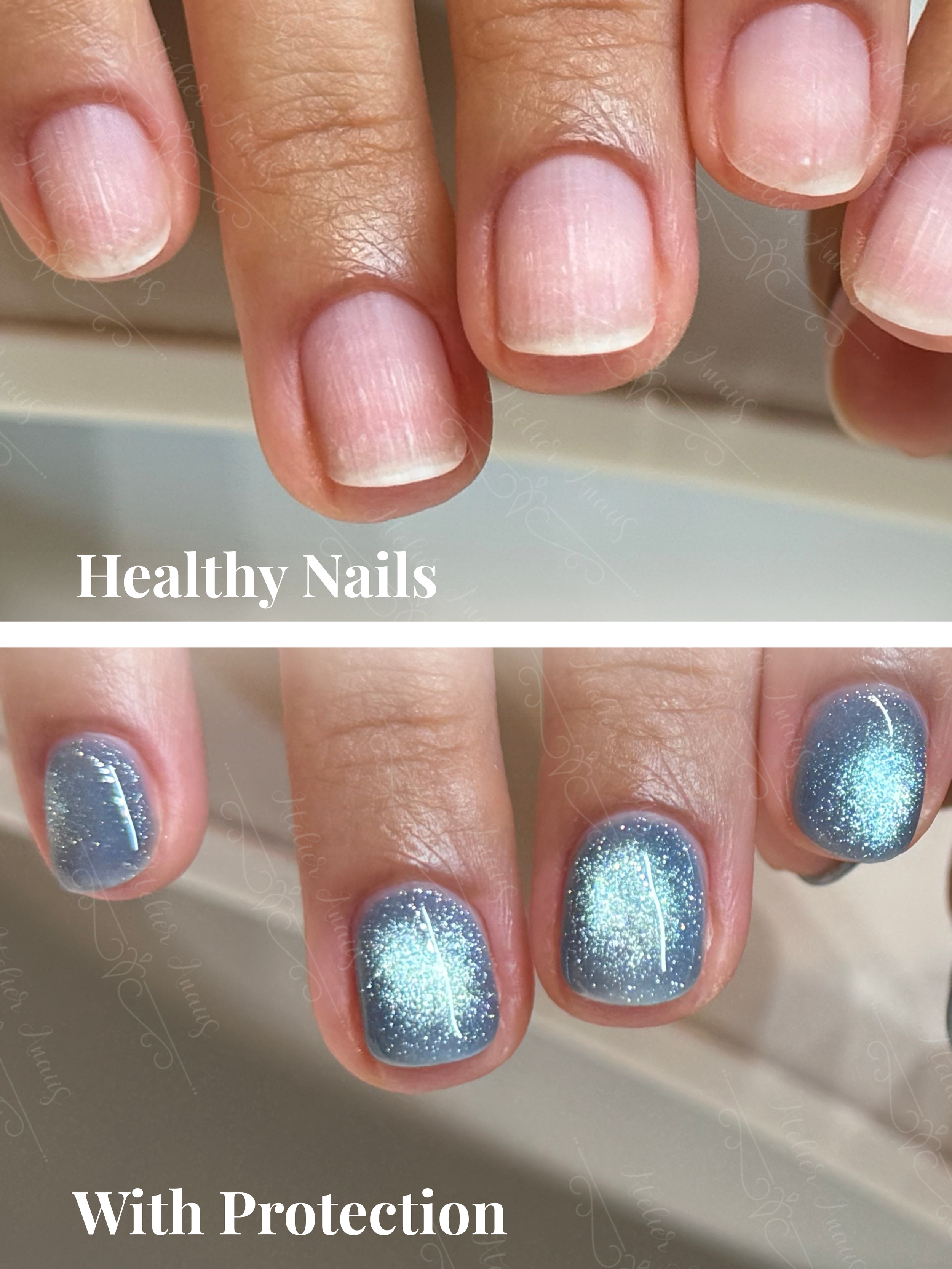
One of the core benefits our clients enjoy is the protective gel layer that lasts three to four weeks. With clients whose nails we’ve gotten to learn deeply, it’s fairly normal for the manicure to last six weeks. But manicure longevity for its own sake tends to not mean much: it’s a vanity metric. What truly matters is what that longevity contributes to the client’s goal of having healthy nails.
What has been made clear through our continual process of refining the manicure with each client is that the longer our product lasts, the longer our clients can have time for undisturbed growth.
Especially for clients with damaged, thin, or bitten nails, having three to four weeks of this robust shield for their nails has a gargantuan effect on their transformation into healthy nails.
Smooth skin around the nails is what determines whether the product is able to last the entire time between appointments.
Without ensuring the skin is smooth before polishing, nail techs often unknowingly paint on skin. As the nail and skin grow and reshape in the days following the appointment, they pull on each other, with the product bridging the two. As both continue to grow, the product eventually splits, and the shield effect is significantly impaired, leaving already-damaged nails vulnerable without protection.
Outside In
The field of psychology and its concept of compensatory control allows us to question conventional thinking on the order of healthy nails and smooth skin. Do healthy nails lead to smooth skin?
Or is it actually that smooth skin is what facilitates nails becoming healthy?
Together with our clients, we’ve discovered that there’s real value in bringing order to the skin surrounding the nail plate. We must always remind ourselves that new nail growth is an internal process – the nail matrix, where new nail growth comes out of, is hidden from view. By bringing order to what we can see – damage to the surrounding skin – we influence the growth of what we cannot see – new nail plates.
Smooth skin is the very first part of our definition of “healthy nails.” And if you’re wanting “healthy nails,” it’s worth asking whether the nail services you’re currently getting are effective in helping you achieve your goals.