What to Do When Your Nail Plate Is Thin
When the nail plate becomes thin, the issue is rarely cosmetic. Thin nail plates are usually the result of repeated trauma over time—such as aggressive removal, electric nail drills, or disrupted care of the surrounding living skin.
Supporting thin nails requires protecting the nail plate as it grows, maintaining the health of the eponychium and nail walls, and allowing time for strength to rebuild through consistent nail care.
Table of Contents
What Does It Mean to Have a Thin Nail Plate?
Why Thin Nails Are a Result—Not the Root Problem
Thin Nail Plates Require More Than Cuticle Care
Communication: The Journey of Healing Thin Nails
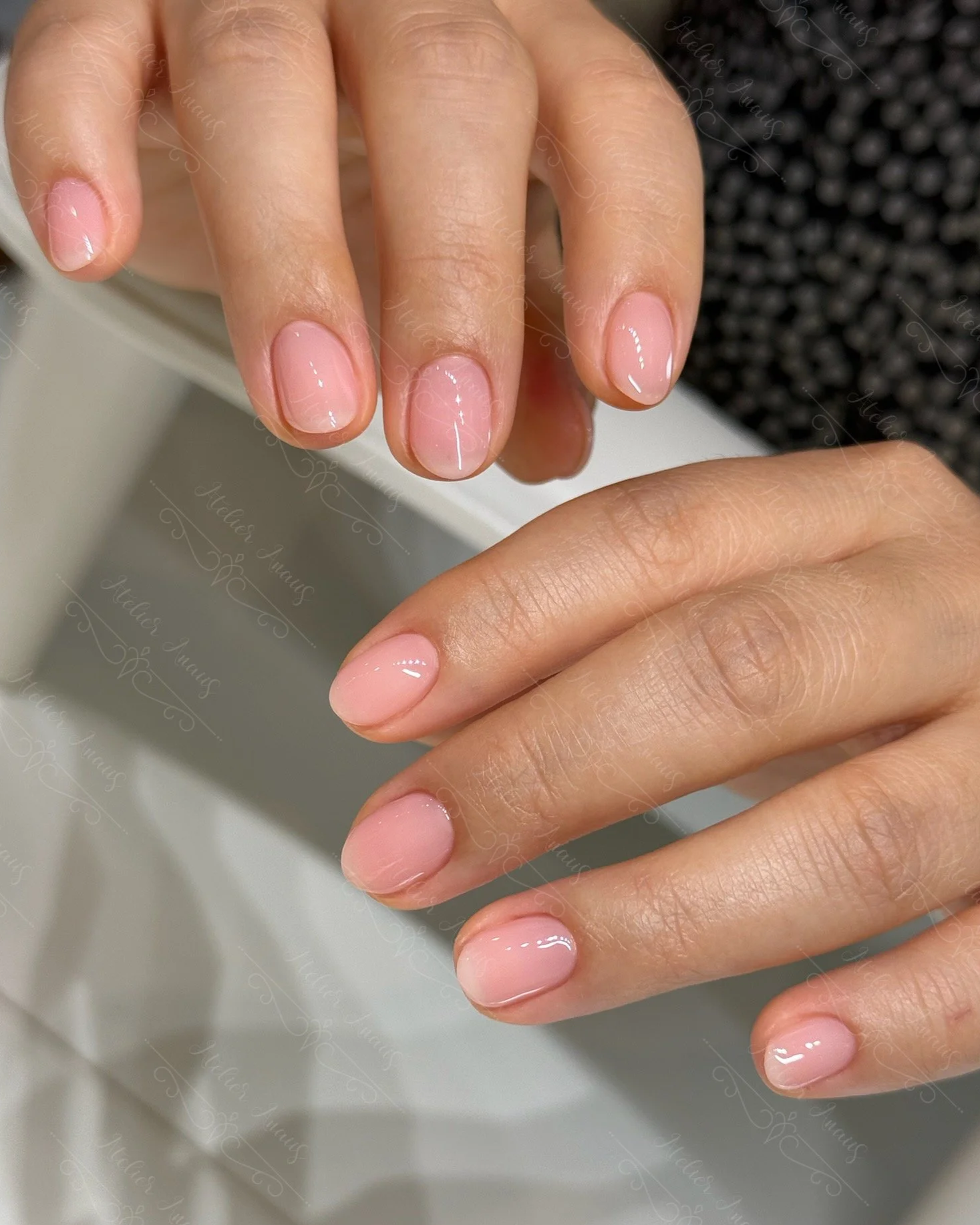
If your nails feel painfully thin, bend too easily, sting under pressure, or never seem to grow past a certain point, you’re not imagining it.
Many women describe the same fear: something is wrong with my nails—but I don’t know what, or how to fix it.
Thin nail plates are uncomfortable, discouraging, and often misunderstood. Some women know exactly when their nails began to thin. Others don’t.
What they share is the same lived experience: nails that feel fragile, exposed, and unreliable in everyday life.
Caring for thin nail plates is a common reason clients seek Atelier Anaiis out. Many arrive after trying online advice, conventional nail salon fixes, or “strengthening” services that promised improvement but never delivered lasting change.
In this article, we explain what thin nails—and thin nail plates—actually mean, why surface-level solutions fail, and the principles we use to support long-term nail health and resilience.
What Does It Mean to Have a Thin Nail Plate?
Nail plates and nail beds are often confused with each other.
The nail plate is the hard, visible portion of the nail that grows from the nail matrix and rests on the nail bed. It’s often referred to as the “natural nail.”
The nail bed lies beneath the nail plate, comprised of skin, tissue, and nerves.
When the nail plate becomes thin, it’s usually not a cosmetic issue—it’s a structural one.
Thin nail plates often result from repeated trauma over time.
This is why thin nails often feel tender, peel at the edges, or sting during everyday activities. And it’s why simply applying polish, strengtheners, or decorative services rarely solves the problem.
Why Thin Nails Are a Result—Not the Root Problem
Before we pick up a tool, we listen.
Thin nails are never the root issue — they’re the result.
The result of years of rushed salon visits, electric nail drills, improper removal techniques, and services and products focused on surface-level decoration.
Our first step at every appointment with a new client is to understand:
Where are you coming from? What removal techniques have you experienced? How do you think you ended up with thin nails?
Where are you now? How do thin nails affect your daily life? How are thin nail plates an obstacle to the things you want to do?
Where do you want to go? What would your nails ideally feel like? What would they look like?
One of our roles at the Atelier is to help you connect the past, present, and future — to weave a thread between the past and present reality of thin nails, with the nails you want to have in the future.
Thin Nail Plates Require More Than "Cuticle Care"
Across the nail industry, there’s no standard for what “cuticle care” is. That’s why every “cuticle care” experience (at the few salons that offer it) are so different.
They either don’t touch the cuticles at all or do too much and cut into your living skin. Since it’s not their bread and butter, they tend to do a poor job of it either way.
At Atelier Anaiis, True Nail Care is the foundation. It’s the center of our universe.
We care for the living skin, nail walls, hangnails, and the eponychium — the real gatekeeper of nail health.
Here, the eponychium is treated as a radio communication tower: when healthy and cared for, it transmits clear messages, protects the nail plate, and guides the nail to grow strongly.
When neglected or damaged by nail drills, it sends distress signals that result in thin nails, peeling edges, stinging sensations, and nails that never seem to grow past a certain point.
Our work focuses on:
The eponychium, which determines how protected the nail plate is.
Living skin vs. cuticles, and teaching our clients the difference.
Nail walls, the structure that supports nail shape, strength, and durability of manicures.
Hangnails, which are not just an aesthetic issue but a health indicator.
Our nails and surrounding skin are parts of a whole. Thin nail plates will never be transformed by places that only give decorative manicures.
Communication: The Journey of Healing Thin Nails
The road from thin nails to strong, healthy nails are never without their challenges. There are setbacks, delays, and frustrations.
Frustrations come up especially because we have an idea of what the transformation is supposed to look like, often based on what we see on social media.
And when the road is not smooth or perfect, or doesn’t meet our expectations, we wonder if we took a wrong turn somewhere.
Transforming thin nail plates takes time.
During each visit, we communicate:
What your nails are telling us
What changes we’re seeing under the polish
How your nails and skin may behave between visits
Where we are in the transformation process
At our nail care studio, you’re never left in the dark. You’re never left wondering, “What’s wrong with my nails?”
Through communication, we get to appreciate and understand every step — together.
Redefining Luxury: No Hot Towels, No Alcohol
Luxury, for us, isn’t warm towels or wine. It’s not scented scrubs or add-ons that distract from the real work at hand.
Atelier Anaiis is a health-first nail care studio, not a spa.
Our clients come to us for one specific purpose: healthy, strong, and resilient nails that last.
Women with thin nails aren’t looking for fluff. They’re looking for a solution to their problem.
They want:
A quiet, private space
A specialist who remembers their nail history
A protocol that protects, heals, and rebuilds their nails
A manicure that lasts not because it’s thick, but because it’s structured correctly
A future where “thin nails” is no longer a part of their identity
That is the luxury we provide.
Frequently Asked Questions
Why do my nails feel so thin and weak?
Thin nails are rarely the root issue—they’re the result of what your nails have experienced over time. For many women, thin nails develop after years of rushed salon visits, nail drill use, improper removal techniques, or services focused on surface-level decoration rather than nail health.
Can thin nails actually be restored, or are they permanent?
Thin nails can be restored, but not through quick fixes. Nail transformation takes time, consistency, and health-first care. When the surrounding skin, nail walls, and protective structures are cared for correctly, the nail plate can begin to grow stronger. Our work focuses on rebuilding nail health over time, not masking thinness with thicker products.
Isn’t cuticle care enough to fix thin nails?
Cuticle care alone is not enough—and in many salons, “cuticle care” isn’t clearly defined at all. Thin nails require care for the entire system: living skin, nail walls, hangnails, and the eponychium. When these areas are neglected or overworked, the nail plate loses its protection and becomes thin, fragile, or painful.
What is the eponychium, and why does it matter for thin nails?
The eponychium is living skin that protects the nail matrix and guides healthy growth. We treat it like a radio communication tower—when it’s healthy, it sends clear signals that help the nail grow strong and resilient. When damaged, often by nail drills, it sends distress signals that result in thin nails, peeling, stinging, and limited growth.
Why do my nails never seem to grow past a certain length?
When the nail plate lacks protection from the surrounding structures, it breaks down faster than it can grow. Thin nails often plateau because the nail walls and eponychium aren’t healthy enough to support length. By strengthening these areas, growth becomes possible again—without forcing length prematurely.
How long does it take to see improvement in thin nails?
Every journey is different. Transforming thin nails is not linear, and there may be setbacks along the way. During each visit, we communicate what your nails are telling us, what changes we’re seeing, and where you are in the process. Progress is measured in health, not speed.